America’s Freedom Paradox and the Indigenous Answer
When we are told the origins of America, we often hear a familiar story: Europeans fleeing monarchal rule, crossing the wild ocean, discovering untamed lands, and forging a new nation in the rugged wilderness. Through generations of struggle and self sufficiency, a nation is created that is unlike any other on Earth. One that promises Freedom and Equality for all.
In this story, American culture is shaped by European pioneers who, through hardship and perseverance, find a deeper morality within themselves and establish a nation that values all men as equal and free.
But this narrative omits a foundational truth.
America was not an empty wilderness. Freedom was not a European invention.
It was a land already alive.
Inhabited by peoples already free.
Indigenous America
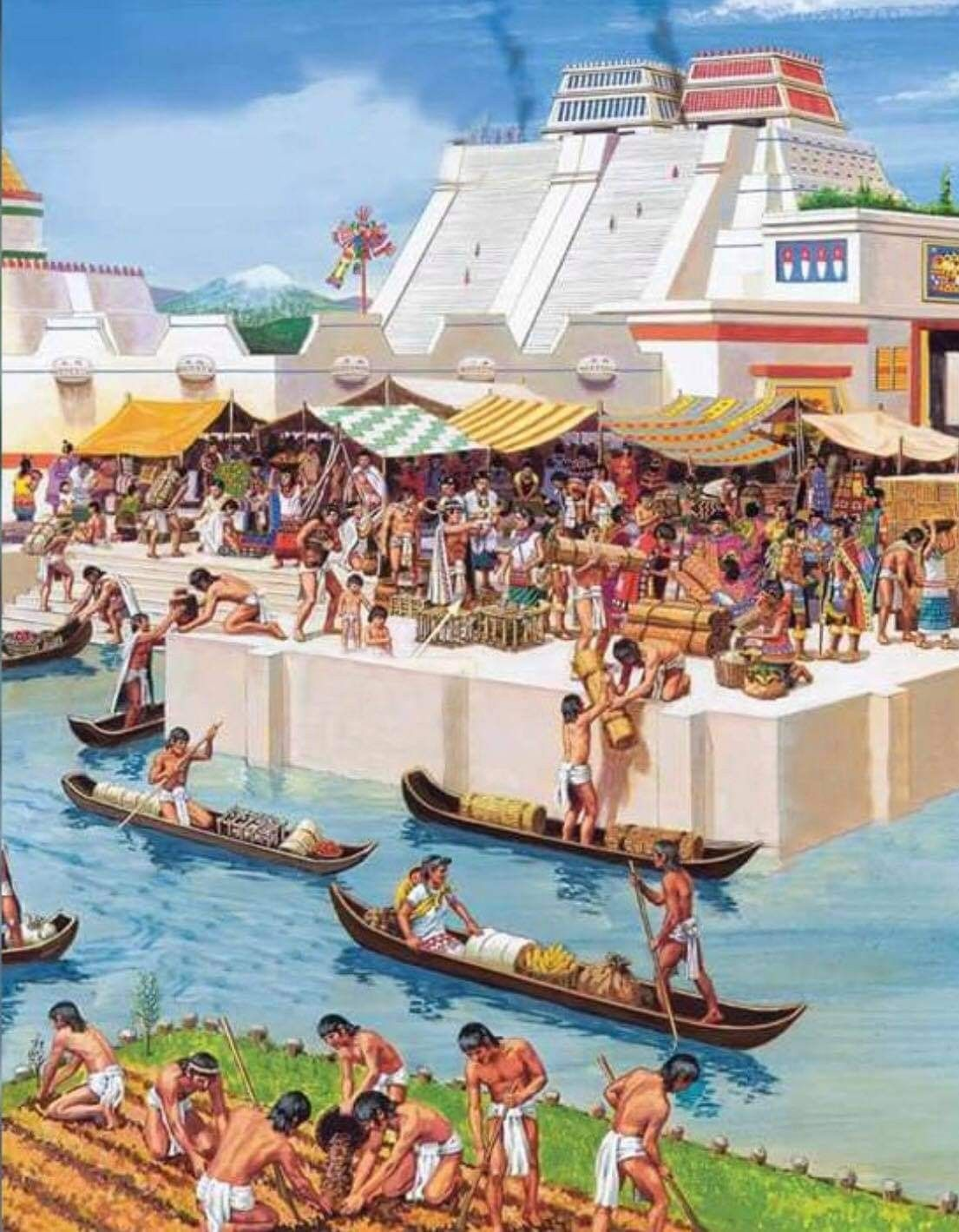
“America”—known to many Indigenous peoples as Turtle Island—was a fully inhabited continent with rich cultures, advanced technologies, sophisticated governance, and deep spiritual traditions that had thrived for thousands of years before European settlement.
Indigenous societies produced:
Advanced architecture (Mayan pyramids, Navajo hogans)
Advanced engineering, astronomy, and medical technologies
Complex music and oral traditions, and sophisticated art and jewelry
Advanced agricultural practices (three sisters farming, Andean terrace farming, Amazonian terra preta)
Advanced democratic governance
At various points in history, some of the largest cities on Earth were Indigenous cities such as Cahokia and Tenochtitlan — urban centers with complex infrastructure, public sanitation, agriculture, trade networks, and cultural life that rivaled or surpassed European cities of the same era.
These societies were often more advanced than Europe in
Agriculture
Urban sanitation
Ecological management
Sustainability
Balanced political structures.
This land was not wild.
It was carefully tended.
Indigenous Democracy: The Forgotten Blueprint
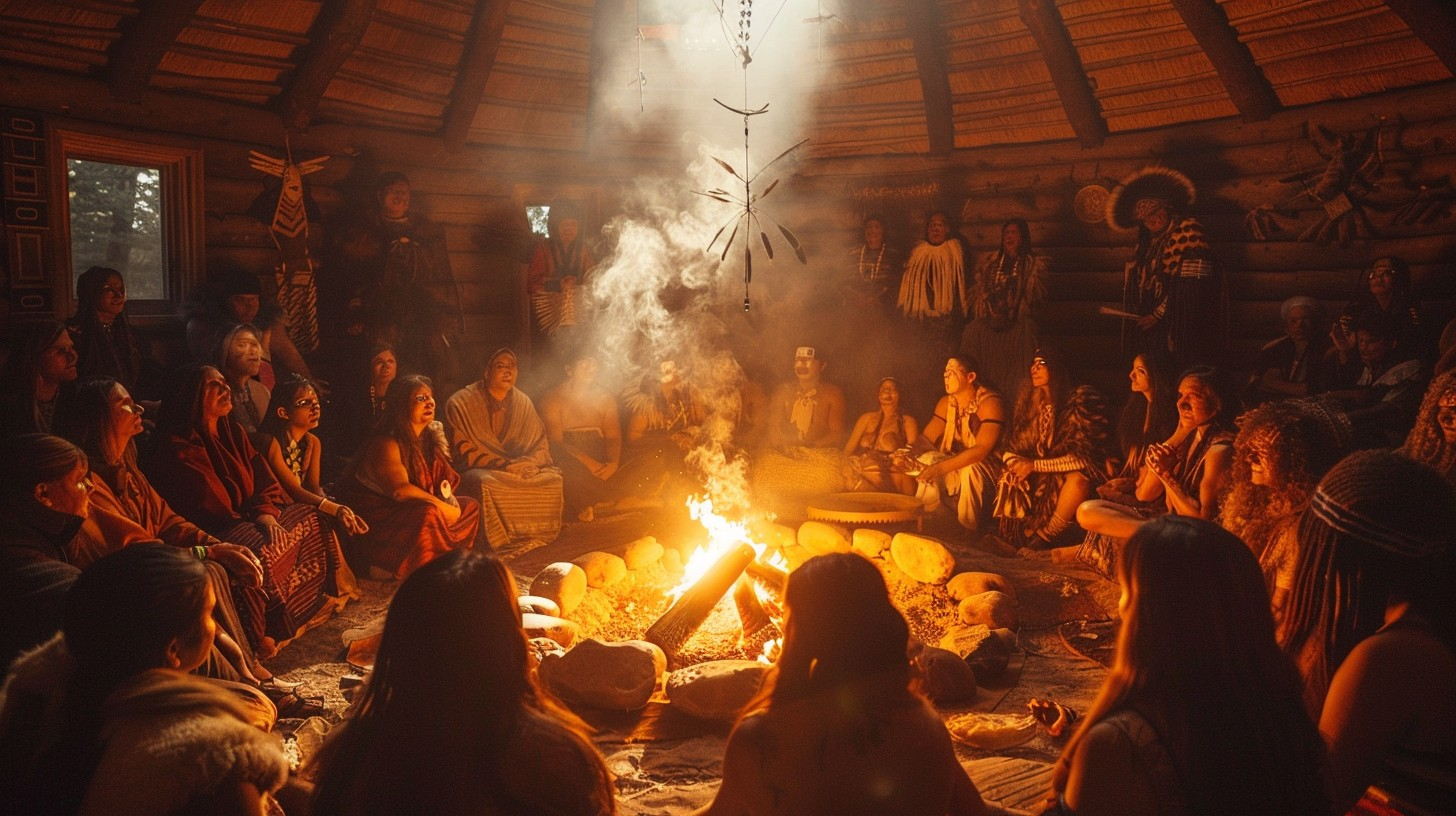
Democracy, Freedom and Equality were not new values pioneered by European settlers. These were values learnt from the Indigenous nations who were were already practicing them.
One of the most influential political systems in human history was the Haudenosaunee (Iroquois) Confederacy, a union of six nations governed by the Great Law of Peace.
This system emphasized:
Consensus-based decision-making
Checks and balances
Separation of powers
Long-term thinking for future generations
These principles directly inspired early American leaders, notably Benjamin Franklin.
In 1987, the U.S. Senate formally acknowledged this influence:
“The confederation of the original Thirteen Colonies into one republic was explicitly modeled upon the Iroquois Confederacy, as were many of the democratic principles which were incorporated into the Constitution itself.”
Freedom and democracy did not emerge from European genius - they were learned from Indigenous examples.
Indigenous ‘American’ Cultures
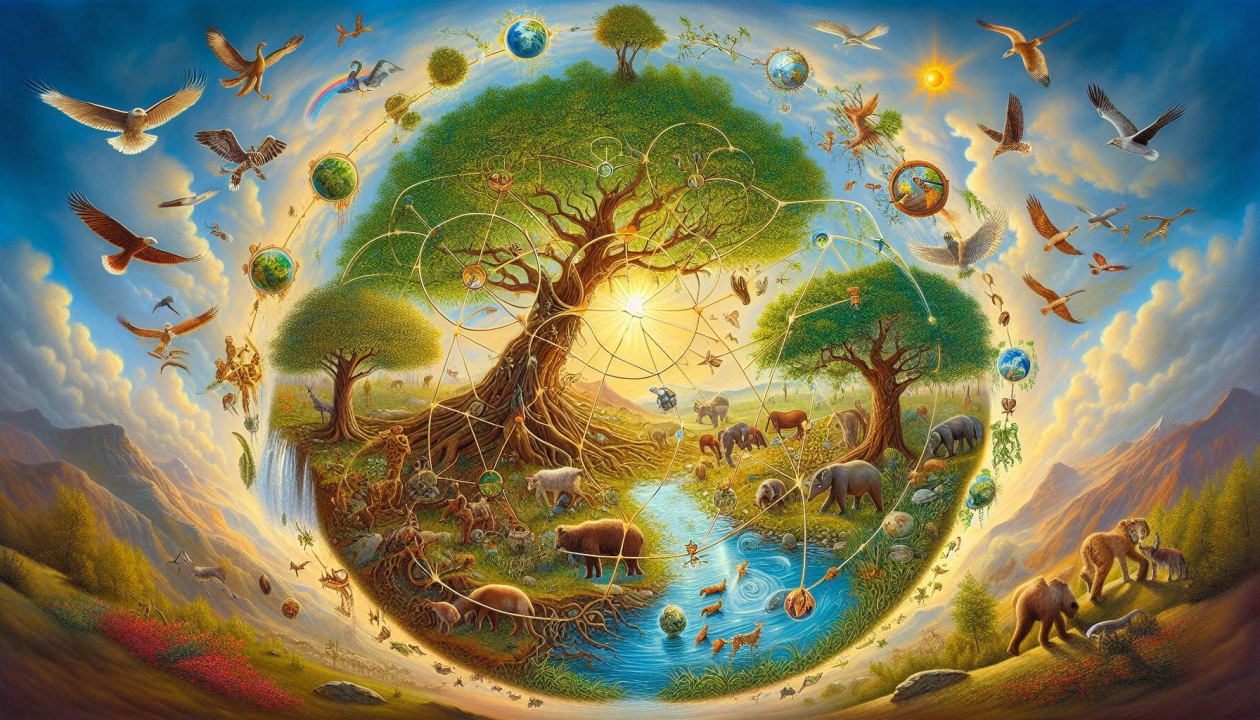
At the heart of Indigenous American cultures is a holistic worldview based on interconnection with all life. One that views humans as part of, not dominant over, nature. Emphasizing deep relationships and recognizing spirit in all creation - people, animals, plants, rocks, rivers, and even phenomena like weather. Viewing nature not as inanimate resources but as a web of spiritual relationships.
Core Indigenous values include:
Gratitude
Generosity
Reciprocity
Balance
Responsibility to the Whole
These values produced egalitarian societies that commonly practiced:
Communal resource sharing
Status gained through generosity, not accumulation
Collective community-oriented decision-making
Balanced gender roles
Reverence for two-spirit and LGBTQ individuals
These traditions faced significant disruption and attempts to dismantle them through European colonialism, which imposed patriarchal norms and ‘Christian’ values.
Ice Ages, Scarcity and the Western Mind
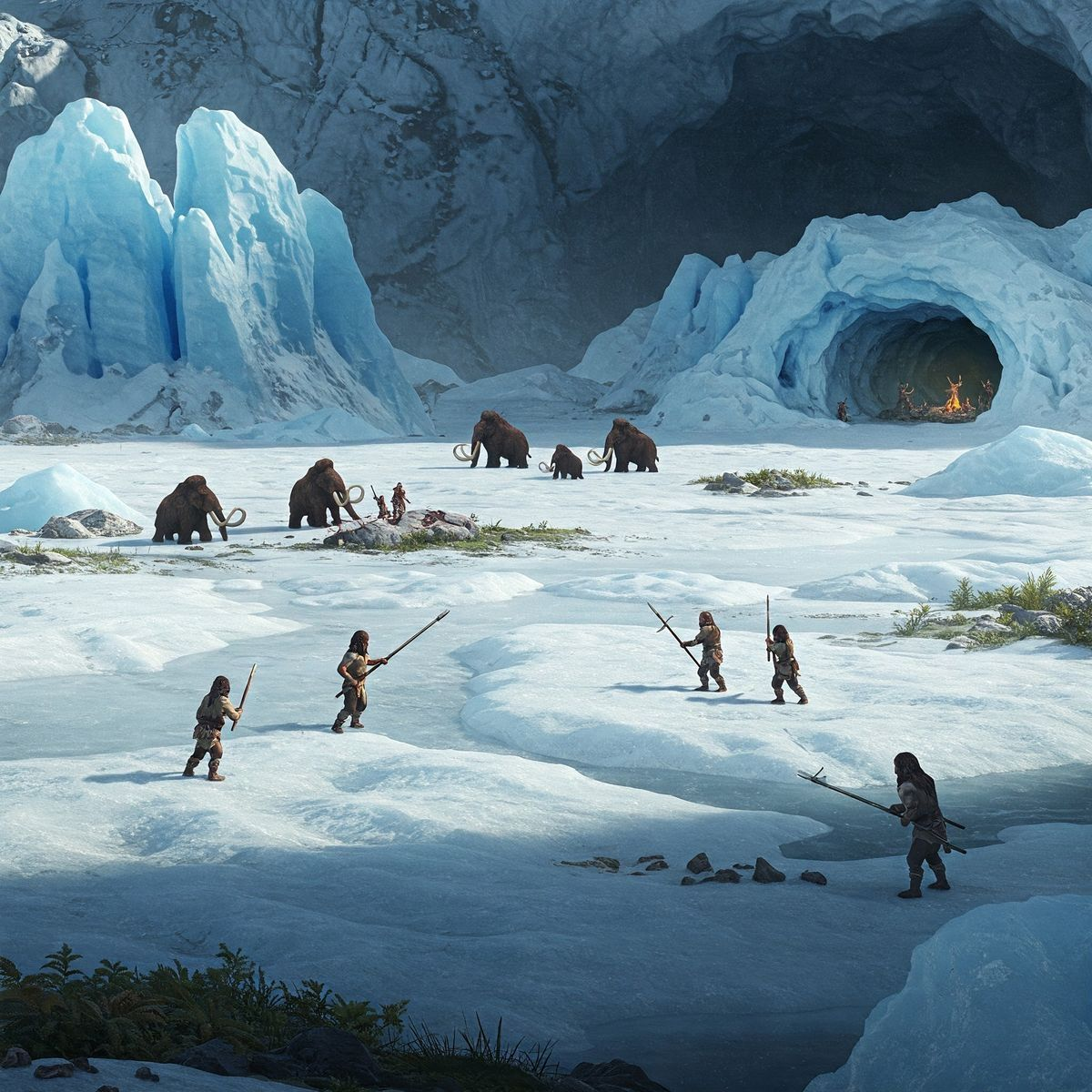
The European worldview was aligned with asserting domination upon the land and extracting maximum resources to serve one’s needs and desires.
The roots of this worldview stem from the extreme conditions Europeans endured during the Ice Ages. Massive glacial ice sheets covered much of Northern Europe and squeezed populations into small refuge zones in Southern Europe. Lower ecological diversity meant fewer reliable food sources. Long, dark winters and short growing seasons meant that calories had to be stored months in advance. Failure to plan meant death, and repeated population collapse events ingrained themselves in European DNA.
Ice Age scarcity left deep social habits in Europe that didn’t disappear when the climate warmed. Instead, those habits were scaled up into agriculture, states, and eventually modern institutions.
Rigid Borders & Exclusion
During the Ice Age, habitable land was limited and populations were squeezed into small refuge zones. These zones were defended fiercely as outsiders were a direct threat to survival. This created strong in-group / out-group distinction and developed norms around belonging, ancestry and land claims.
Post Ice Age expressions emerged as fixed borders, inherited land rights, feudal domains and nation-states obsessed with territory and control. A strong distinction between insiders and outsiders and citizenship as a gatekeeping mechanism.
Scarcity turned space into identity.
Hoarding, Hierarchy & Inequality
Since surviving scarcity required increased group coordination, resource hoarding and shared rules about food access, Leadership became survival-critical, not optional. Stored meat, fat and hides meant survival. Exclusion from stored resources meant death, and those who controlled storage had power.
Post Ice Age, these these coordination habits hardened into permanent leadership and turned seasonal authority into hereditary status. Grain replaced meat, but the logic stayed - Control food, control survival, control people. This led to private property, surplus extraction and class division between farmers and elites.
Hierarchy felt normal because it had once saved lives.
Inequality emerged from survival logistics, not ideology.
Discipline, Obedience, Moral Authority
When mistakes mean death, rule-breaking is dangerous, obedience feels virtuous, and authority gains moral weight. Ice Age Europe reinforced ritualized behavior, respect for tradition and punishment for non-cooperation.
Afterward: religious hierarchies flourished, moral authority fused with political power and obedience became ethical, not just practical. Kings were replaced with churches and institutions.
Rules and hierarchy weren’t just enforced — they were moralized.
Acceptance of Inequality as “Order”
Europe experienced repeated Ice Age population crashes, abandonment of entire regions, and cycles of collapse and reorganization. The psychological legacy of this meant a fear of disorder, preference for stability over equality, and tolerance for rigid rank if it promises survival.
This helps explain why later European societies often accepted, kings, nobility, rigid class systems, and inequality framed as “natural order”.
Ice Age Europe trained societies to believe:
Hierarchy prevents chaos
Hoarding and control prevents famine
Obedience prevents collapse
Inequality is safer than disorder
These beliefs:
Were adaptive under extreme scarcity
Became maladaptive when conditions changed
Still echo in modern institutions
Modern European politics still run Ice Age software: excellent at preventing collapse, less comfortable imagining abundance without control. The same instincts that once prevented famine now block transformation.
Post Ice Age European states were built around scarcity management - valuing private property and hierarchical power. Creating a society where wealth was concentrated in the hands of a minority elite while 90% of the population lived in extreme poverty.
Repeated Ice Age scarcity made order, control, and inequality feel safer than freedom or fluidity.
Manipulation & Worldview
Another byproduct of surviving the Ice Ages was the increased manipulation of nature.
Manipulation itself is not inherently wrong - I am manipulating my fingers to type on the keyboard. The computer is manipulating the pixels on the screen to display this image. The indigenous utilized their minds and muscle to manipulate wood and stone to create weapons for hunting and homes for shelter.
The difference is this:
The more extreme conditions of scarcity in Europe required greater levels of manipulation and organization for survival.
The problem was that the European mind became so focused on control and extraction for survival that it lost sight of the larger whole - the web of life.
Over time, this produced:
Isolation (see Aristotle’s atomistic philosophy)
Devaluation of individual life in densely populated cities
A worldview that separated humans from nature - viewing nature as an inanimate resource
A study presented participants with images of a cow, a chicken, and grass and asked them to identify the odd one out. The majority of Westerners (of European dominated society) chose grass, while Easterners chose chicken. The reason suggested is that Westerner’s come from the Aristotelian tradition of viewing objects in isolation. For them, grass is a vegetable while the other two are animals. In contrast Easterners view things in terms of relationships, and the cow has a relationship with grass as it’s food source. (Richard Nisbett. The Geography of Thought)
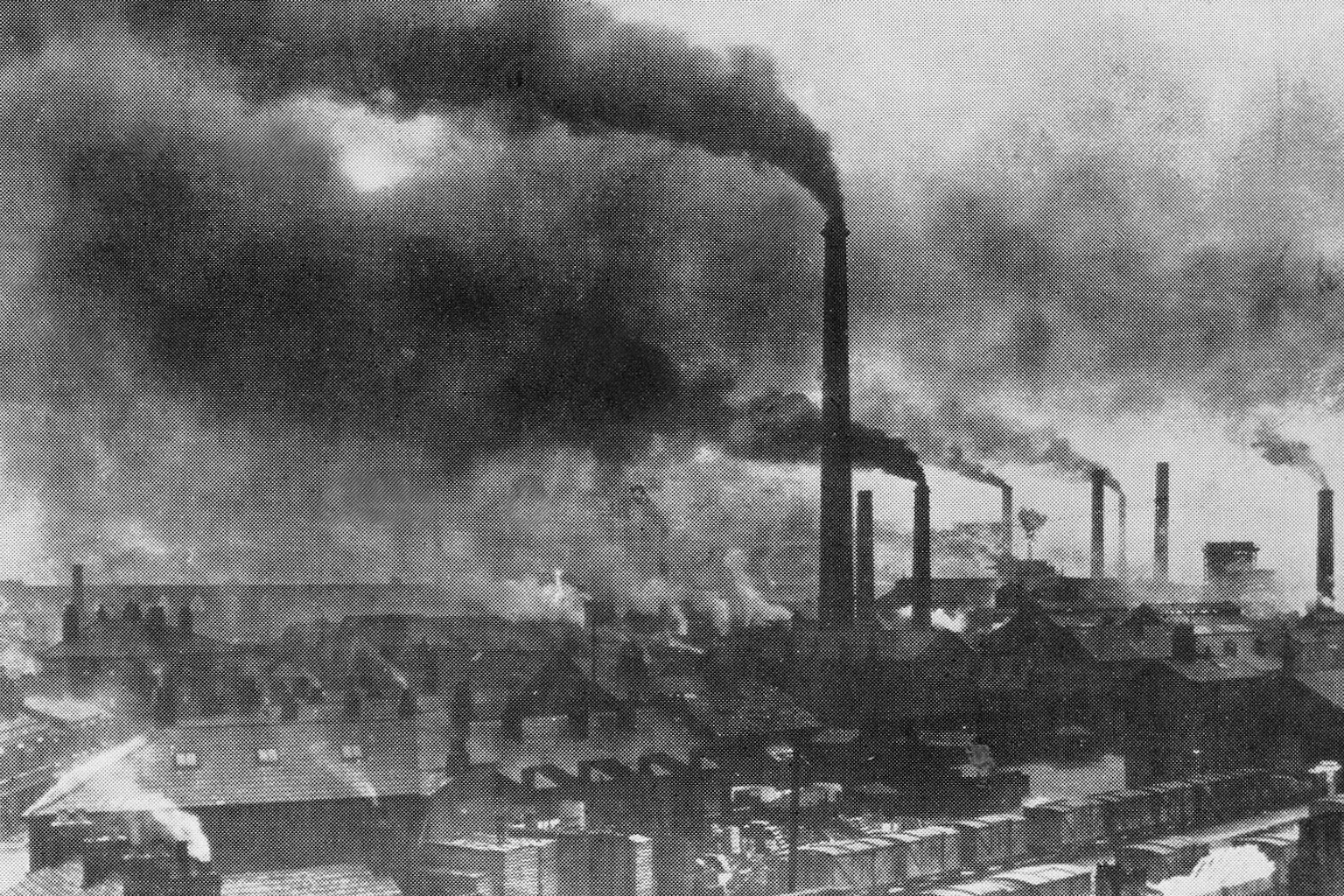
This increased level of attention to objects in isolation, paired with disconnection from nature, birthed the industrial revolution in Europe. While there were incredible technological advances - blue skies, fresh air and green lands turned into black clouds of smoke that suffocated bleak concrete jungles.
They could not see that in many ways they were stripping themselves of the true quality of life, centered around spiritual connection with nature and humanity, fostering real well-being.
A Different Relationship With Life
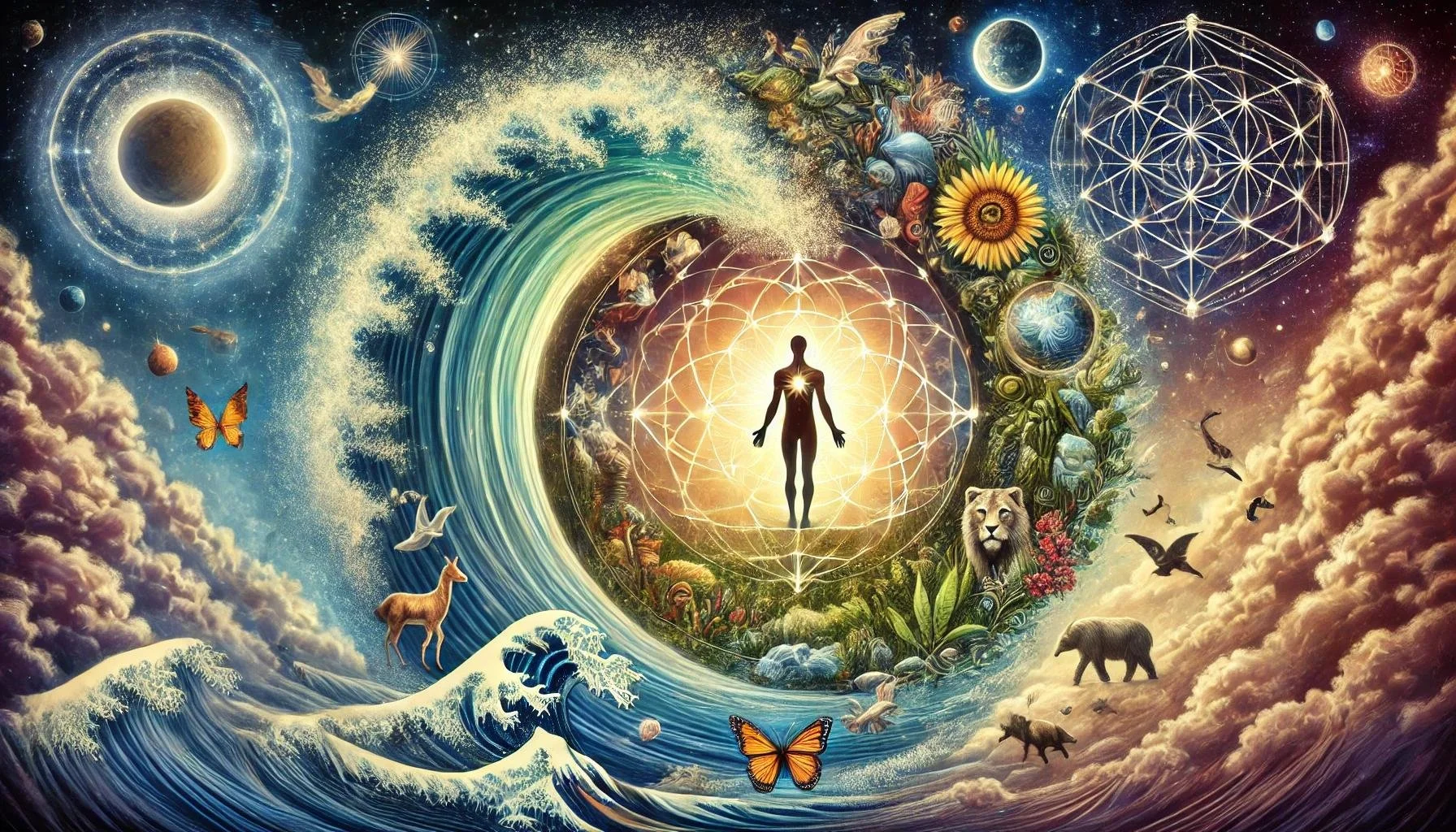
At the heart of Indigenous American cultures is a radically different worldview—one based not on domination and extraction, but on interconnection with all life.
The Earth is not a resource to be exploited, but a living relative - mother of all life. Plants, animals, water, sun, moon, stars and land were all part of an interconnected family. It is honorable to live in generous reciprocity with the land and all who walk or fly upon it, 2 legged and 4, so that all may be in abundance.
This ethic is practiced through what many Indigenous traditions call the Honorable Harvest:
Take only what you need
Use everything you take
Give back and ensure abundance for future generations
This worldview was paired with highly advanced agricultural practices, such as the Three Sisters farming method (corn, beans, and squash), which enriched soil fertility, maximized yields, and worked in harmony with natural systems—far more sustainable than modern mono-crop farming that depletes the soil and relies on chemical fertilizers that poison ecosystems.
These were not “primitive” cultures. They were deeply intelligent civilizations that understood the interconnected web of all life.
The Gift Economy: Another Way to Live
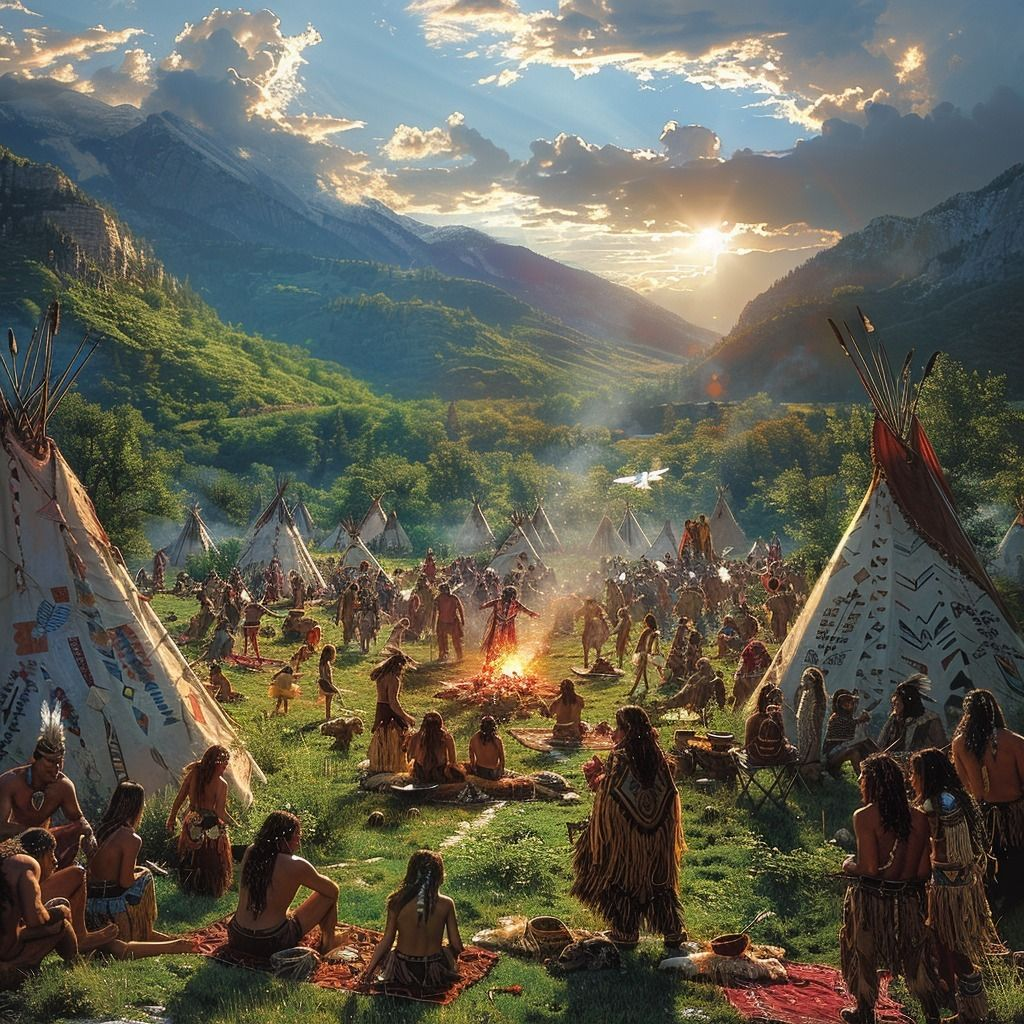
Anthropologist Daniel Everett once observed a hunter-gatherer in the Brazilian Amazon who returned with a kill too large for his family alone. Everett asked how he would store the excess meat. Smoking and drying techniques were well known; storing was possible.
The hunter was puzzled by the question, and instead invited neighboring families to gather around his fire and feast. This seemed inefficient to Everett, who asked again: why didn’t the hunter store the meat himself for later, which is what the economic system in the researcher’s home culture would suggest.
“Store my meat?” he replied.
“I store my meat in the belly of my brother.”
There beats the heart of a gift economy—a system where abundance is sustained through sharing, not hoarding.
An economic system where goods and services are given freely without explicit agreement for immediate return. The primary focus is on building relationships and fostering community, rather than monetary profit and material gain, with reciprocity often occurring at later times in different forms. The gift economy emphasizes generosity and cooperation, and prioritizes collective well-being over individual accumulation.
Destruction Through Colonialism
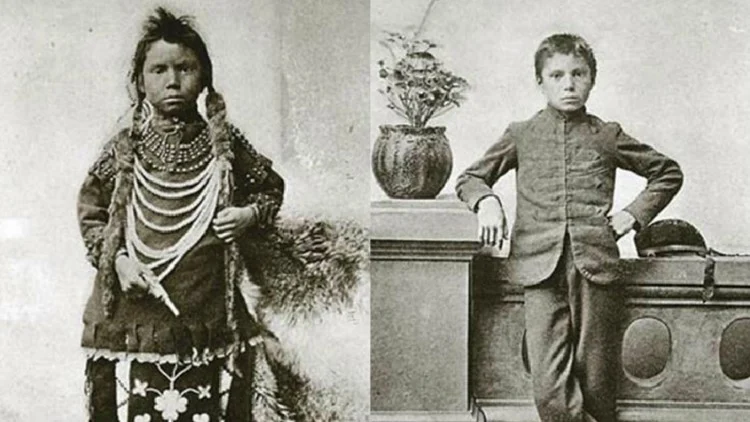
The world we have created today appears to be on the brink of destruction while Indigenous Culture & Wisdom is simultaneously on the brink of extinction.
90% of Indigenous died through European disease. In the United States particularly, much of the surviving population was repeatedly displaced to far away lands and subject to inhumane conditions until they all but withered away in “Indian Schools” that “cleansed” and stripped them of all sense of identity, culture and humanity. Often tortured to death in the process.
Today, Indigenous peoples make up roughly 2% of the U.S. population (https://iwgia.org/en/usa/5762-iw-2025-usa.html), many of whom are mixed race.
While the Indigenous peoples were removed from the land, one core Indigenous value remains embedded in the land and the Constitution:
Freedom.
The American Paradox

While Americans say they are free, if you look at modern American society, freedom is scarcely found. Instead, it is common to see slaves. Men and women slaves to a socio-economic climate run by massive corporations that value profits over life. Humans have turned into cogs in a machine that are discarded the moment they are no longer profitable.
The Ford Motor Company might be the most American corporation there is. What began as an evolution in the way humans transport themselves across the earth, became a corporation that sabotaged the railroad and stripped Americans of usable public transport, forcing car-dependance upon them. Then decided not to recall the Ford Pinto’s fatal rear gas tank because it was cheaper to pay off the wrongful death lawsuits instead. They could have spent $11 per vehicle and prevented the loss of life and injury, but they valued profits over life.
America does not reflect the values of Freedom that are core to the American foundation and constitution.
There is a tragic void in the American psyche.
“The land of the free” has:
The highest incarceration rate in the world
Massive wealth inequality
Measurable racial inequality
Widespread mental illness and despair
Freedom is celebrated rhetorically, but rarely embodied.
It is not freedom to trap children in a classroom 8 hours a day, then punish and medicate them when they want to run, play and be children instead. It is not freedom to necessitate the pursuit of “higher education” (deeper colonial conditioning) to get a reasonable job, but need to go into crippling debt in order to afford that education. Having no choice but to slave away in an office job simply to pay your bills and survive. Or go into life-ending debt if you need to see a doctor and don’t have health insurance.
This is not a free country. The American mind is enslaved and incarcerated in chains.
The Erased Authors of Freedom
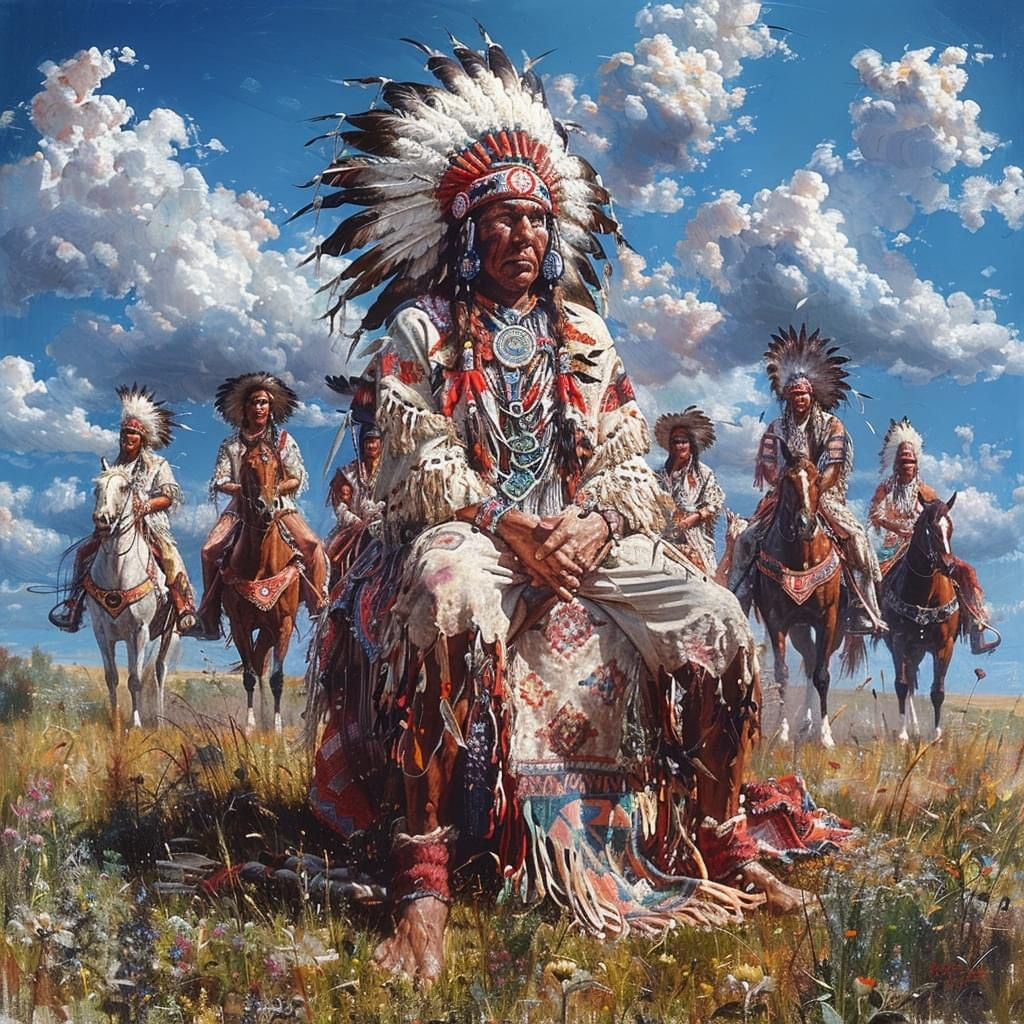
How is it that a country with freedom built into its constitution fails its own people so deeply? It is because the authors of these values are forgotten and discarded. The essence of the values is lost with the people who lived them.
Thomas Jefferson’s claim that “all men are created equal” echoes Indigenous values—not Colonial ones. Indigenous societies were egalitarian and free, the chiefs did not have more than others; often less because they had earned their status by giving away all they had to those in need.
Equality was lived, not declared.
Europeans who lived among Indigenous tribes often refused to return to Colonial society. Some escaped back after being “rescued”, others such as Cynthia Ann Parker died trying. This points to a deep ancestral memory of a freer way of life.
When we take the Indigenous values of Freedom and Equality and brand them as “American”, while completely discarding the true authors, we get a romantic ideal of freedom and equality but we lose the actual wisdom and embodiment of these values. While Americans say they are free and equal, the Indigenous actually lived that way in practice.
They lived as the trees in the forest, looking out for one another and sharing resources to prioritize the health and wellbeing of the entire forest or tribe. Trees that have, give to trees that need. For they know that each tree is a tree, but each tree is also part of something greater than itself, the forest. Just like each of us are part of something greater than ourselves. And together we make up the tribe of mankind.
Freedom and equality for all means freedom and equality for ALL. Freedom is an Indigenous value that is rooted in sovereignty, respect & reciprocity. Right relationship with all life. Compared to the modern day inhumane treatment of animals and fauna as resources, merely to be consumed without any respect or gratitude. The same way the common man is treated by the system, as a resource to be consumed by the machine and discarded without care once no longer profitable.
Without reciprocity, respect, and relationship, freedom collapses into exploitation.
Full Circle Reset

It requires strong motivation to upend ones life, risk a voyage across wild waters, and travel to unknown lands for a chance at a better life. It requires a life with no hope, no social mobility, no light on the horizon and no other choice. To risk everything for a chance.
When we ignore and disregard the true roots of this land, the Indigenous peoples and culture, we create the exact same conditions the Europeans settlers were escaping in the first place:
Concentration of wealth in the hands of an elite minority.
Rigid hierarchal social structure with a lack of social mobility and middle class.
Concentration of power in the hands of a monarchal dictator king.
Historically such conditions have led to violence, revolution, reset and/or genocide. All of which we are on the brink/in the midst of today.
We are at a breaking point and the answer is not in the symptoms but in the roots, in the ways of the true authors of real American culture and values, now more than ever.
Remembrance as the Path Forward
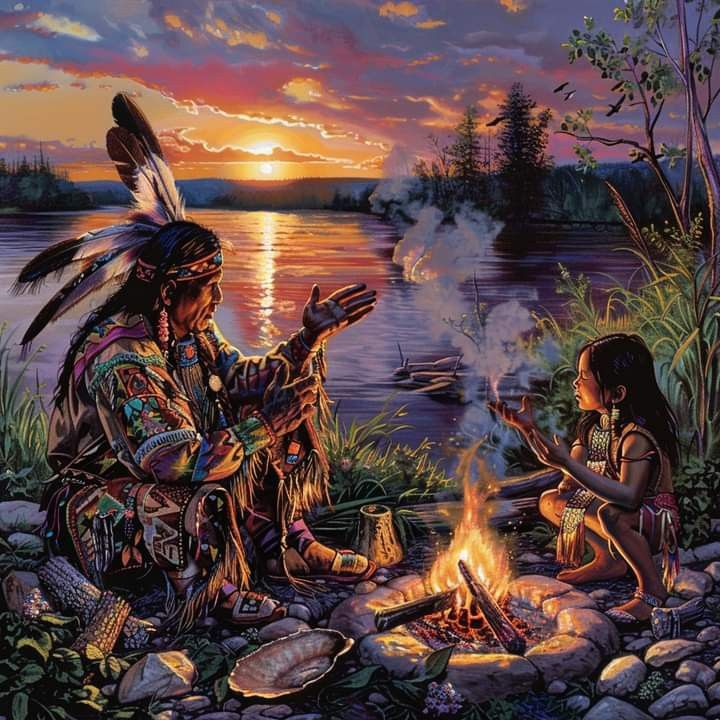
The path towards true freedom is remembrance. Remembrance of the ways of those that walked before us in the blueprint of true Freedom. Remembrance of how they lived in reverence of and in reciprocity with the land and all that walked upon it.
Living in right relationship with the land
Sharing resources so all may have enough
Honoring future generations
Understanding that no one is free unless all are free
The forest teaches us this. Trees share resources through underground networks. Those with abundance give to those in need, because they understand they are part of something larger.
So are we.
Refusal and Reclamation
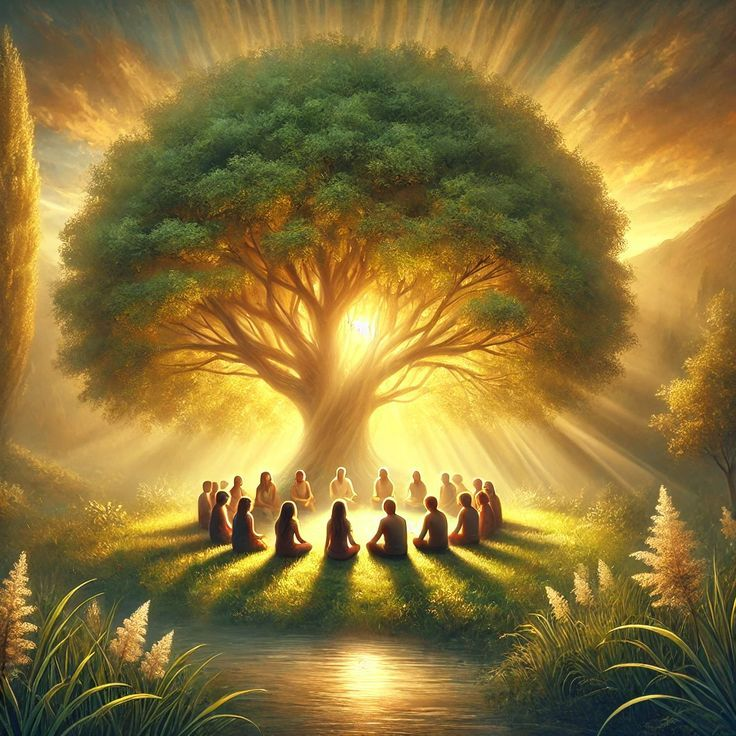
This remembrance must be paired with refusal.
A Refusal to participate in systems of exploitation that we were born into and are living in today.
We do not get a choice in the world we were born into, but we do have choice and responsibility in how we navigate this world and what world we co-create for future generations. It was not always like this and it will not always be so. We must not and will not allow it to be so.
We must first recognize where the Colonial imprint is alive within us and perpetuated through us. Within all of us we hold both Colonial programming and our own inherent Indigenous values. In order to reclaim these values, we must be willing to look at ourselves with full honesty and with the courage to change. To purge the obsession with self gain and hoarding while others starve around us.
While recognizing our individuality as trees, we must recognize our unity as a forest. This desire to hoard while others starve is rooted in a fear of scarcity that ultimately leads to our own demise. We must shift from what can I gain to what can I give.
Refuse to operate in a system that chains us. Refuse the cage of comfortable illusion.
Comfort rooted in lies is not safety.
True safety lies in truth.
Truth is freedom.
Freedom is truth.